A look back on physical security at NASA JSC - From quaint to decent

Earlier this month, I sold my 2002 Toyota Sequoia, which triggered a huge dose of nostalgia. One of the last things I asked the dealer to do was remove the yellow sticker from the windshield. It was an artifact of a bygone time, a vehicle pass for work. I didn’t need it anymore. It was a relic, but I was programmed to not let it go with the car.
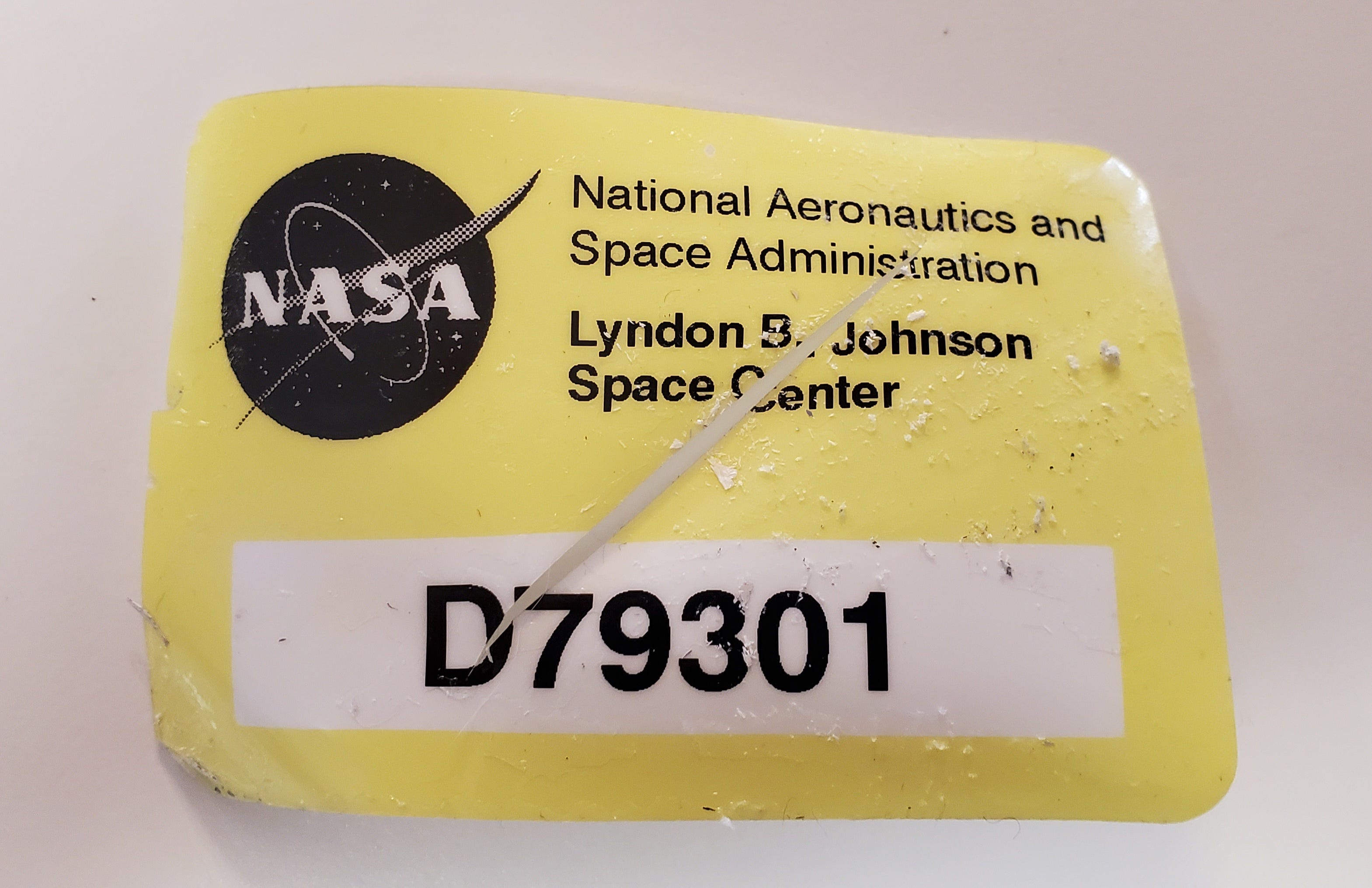
When I first came to work at NASA’s Johnson Space Center in 1979, it was an open campus. Anyone from the public could drive onto the site, park, and walk around. There were security guards at the gates (which were always open), but they mostly gave directions to delivery trucks and those who stopped and asked where the visitor center was; employees just drove right through with a wave. Employees had stickers attached to their windshields to drive on site, but they were largely used to enforce parking violations. There was a small visitor center with some interesting artifacts, co-located with the auditorium. Aside from the cafeteria and tiny gift shop, all the other buildings had a little 2”x3” label stuck on the glass doors that said something like “Not Open to Public Visitors.” There were guards posted in the lobbies of three buildings to prevent the occasional visitor who ignored those tiny signs from going up the elevators to the astronauts’ or upper management’s offices or wandering into Mission Control.
Consequently, visitors freely roamed about the grounds, pressing their faces up to the slightly tinted windows with their hands around their eyes to block the glare and were sometimes startled to see an engineer just inside staring back. Others would wander around with large sacks collecting “space cones,” which we jokingly called the weirdly large loblolly pine cones from the mall area trees. It oftentimes felt a bit like being an exhibit in a zoo. “See the rocket scientists in their natural habitat.” But NASA was a publicly funded government facility and we didn’t question the lax security overmuch or their right to be there.
We all had badges, but they were worn infrequently except when needing to use those elevators in Buildings 1 and 4 or go into Mission Control. What was the point when such casual physical security was the order of the day everywhere else?
Then, in 1992, Space Center Houston opened for business adjacent to JSC and the last rationale for open gates was gone. Memos were sent out reminding employees to wear their badges at all times and notices were posted on bulletin boards demanding all employees “challenge anyone not wearing a badge,” thereby deputizing the entire staff in newfound security surveillance. Gate guards now had the added purpose of verifying that each personal vehicle had a sticker. In the end, it was partly performative. Yes, the wandering visitors were gone, but family members still had free access as did anyone who bought a used car with the sticker still left on it. And nobody felt comfortable asking to see someone’s badge - the result would be either ticking off a colleague or confronting an evildoer while unarmed – so that rarely happened. And badges continued to be sporadically worn.
At some point, the stickers-on-the-used-cars loophole got too prevalent. The solution was to mandate that all the stickers be replaced by new stickers in a different color so all those pirates with old blue stickers couldn’t drive on through the gates anymore. And employees who requested new stickers when they bought new cars wouldn’t get them until they handed over the remains of the old ones. That narrowed the loophole a tiny bit, but access to the site still hinged only on vehicle ownership rather than employee status. (In case you were wondering, employees could not simply show their badge to access the site; their vehicle had to be registered.) They eventually stopped asking employees to confront the unbadged. Perhaps more harm than good that came of that.
At some point, every building was locked every evening and unlocked in the morning before most arrived. A tremendous task given the number of buildings (100) with some having as many as 15 exterior doors. Guards would wander the buildings looking for miscreants in the wee hours. If an employee needed to go into a building after hours, they needed to request dispatch send a guard to unlock the building and present a badge to get in.
When John Glenn returned to JSC to train for his 1998 Shuttle flight, another wave of physical security awareness hit JSC. Truck bombs had recently risen to a viable threat for US government facilities after the Oklahoma City bombing in 1995. So, to protect John Glenn who, in addition to being a US Senator was widely labelled a “national treasure,” JSC embarked on a plan to install bollards, hundreds of yards of them around buildings housing Mission Control, management, and astronauts, i.e., anywhere John Glenn was expected to be. Gate guards were assigned to parking lots blocked off by the bollards and badges needed to be shown, in addition to the now-yellow stickers, to get a car inside. A fair but extravagant improvement to a physical security, considering it was implemented for just one circumstance and just one type of threat. It had the unfortunate side effect of telegraphing to the majority of employees whose buildings were outside those barricaded perimeters that they were expendable fodder for the hypothetical truck bombers. However, placing bollards around the entire six-mile perimeter of JSC was undeniably impractical, financially. One thing that never changed was the fact that the entire perimeter of JSC is protected by only six miles of sharp-topped chain link fence and signs labelling it as federal property, and most of it is around wooded or untraveled areas. If someone seriously wanted to encroach where they don’t belong, it wouldn’t be overly difficult.
Then 9/11 happened. By 10:30 am that day in 2001, employees were hustled off site because a threat of destruction coming to a high visibility government facility through the air, not via truck, suddenly seemed very possible. When employees were allowed to come back to work, it was clear a sea change in access to the site had taken place overnight. Every single person in every vehicle needed to show a badge and all the vehicles were inspected for bombs. Trunks were opened and guards used mirrors to check the undercarriages. It took a very long time for the nearly 15,000 employees to make it into work. They asked people to arrive in phases depending on their zip code to reduce the traffic jams. JSC had returned to protecting against the threats could they could control, if not the most recent one.
Within weeks the vehicle inspections were dispensed with. Criticism eventually arose that the badge-by-badge checks had become too perfunctory, perhaps because people still had the yellow stickers which gave a false sense of belonging. So, it was made clear that stickers no longer conferred any right of belonging – the sticker era had officially ended. Expiration dates were added to badges. Guards were expected to look closely at every badge to verify they were not expired and matched the face of the holder. Eventually a requirement arose for guards to physically touch each badge, in an effort to force a minimum level of interaction with them. This last measure only lasted until the spring of 2004 when the SARS virus outbreak cropped up. Having a handful of guards touching a personal item of every single person who came through the gate was a new kind of hazard, a potential biological transmission source.
With the bollards, extra gate guards, and everyone badged, the early 2000s was probably the height of physical security at JSC. Eventually things tapered off as they are wont to do when nothing bad occurs for a long time. John Glenn completed his flight and went back to Ohio. The bollards protecting him are still there - and will be for eternity because they’re 10 feet in the ground - but the gates to get inside their perimeters are gone, no longer monitored. Locking the buildings at night was discontinued, probably because the badge access at the gates became universal. Key codes were installed on some doors, though not all. (That lack of human involvement in unlocking a building may have contributed to the notorious inside job when three rogue interns stole a cabinet of moonrocks.) Electronics replaced guards in regulating access to sensitive areas. With magnetic strips (and eventually chips) in the badges, badge readers were installed at the entrance points for Mission Control and other sensitive labs across the site. Interestingly, the one location that never recaptured its priority for limited access was the management offices, Building 1. Perhaps it became a hard sell to elevate their safety above the average workers.
Of course, the advent of more affordable security cameras and monitoring meant that remote physical security was also added atop many buildings and behind the scenes, but that was largely outside the visibility for the average employee. It wasn’t something everyone could see and participate in. The annual mandatory security briefings all employees attended were another matter. Those sessions evolved from in-person sessions in the auditorium (multiples every year, because the population was way too large to fit everyone into one session) to computer-based training modules done at one’s desk. The security risks changed from concerns about on-site traffic and crosswalk violations, with a dollop of sabotage of sensitive hardware by foreigners, to identifying computer phishing and social engineering. Employees were even sent faux phishing attempts en masse to see who could be tricked into clicking on dodgy links.
Who knows what the next evolution of security measures will be at JSC? It remains a location of national interest in the US federal government. It houses both priceless moon rocks and individuals considered national heroes. It has two National Historical Landmarks. It belongs to the taxpayers, but the taxpayers must be kept at arms’ length to protect the national assets. And yet it’s built on 1,700 acres of cow pasture in the middle of suburbia, in a flood plain and a hurricane zone, making its protection very challenging. With the retiree alumni badge I renew each year for the sole purpose of being able to drive on site as I did for 40 years, I’ll be watching to see what comes next. I have faith it will be OK.
And I’m tempted to put that yellow sticker on my new car for old times’ sake
#NASA #JSC #Security #history
Hi, Mary. I've signed up, and am looking forward to reading more 'inside' NASA stories. This post took me back to similar events at the aerospace manufacturer I worked at. It also brought back fond memories of visiting JSC with a friend who worked there. I'll admit to have been tempted to press my face against at least one office window to see what cool collectibles were inside. :-)